

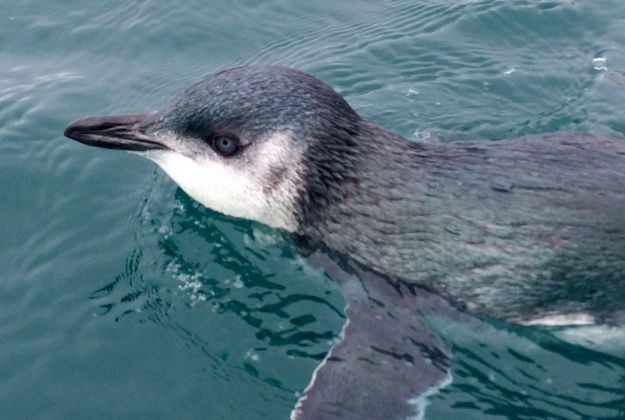
Little blue penguins are also known as kororā in New Zealand, and as fairy penguins in Australia.
They are small, slate-blue penguins with and bright white bellies, found around the coastline of New Zealand and southern Australia.
Like all penguins, little blue penguins can't fly. Their paddle-like flippers are excellent for 'flying' through the water though, reaching speeds of up to 6 kph!
Little Blue penguins only come ashore under the cover of darkness, and live underground in burrows, natural holes, or under human structures or buildings. Blue penguins forage for food up to 25 km offshore and 70 km from the colony.
Blue penguin populations have been declining in areas where they aren't protected from introduced predators, including cats, dogs, rats, stoats, and people! Where predator control is in place, penguin populations are stable or increasing.
Why and When do Little Blue Penguins Come Ashore?
Adult penguins come ashore between May and June to prepare their nests. This small bird may waddle up to 1.5 km from the sea and climb 300 metres to find the perfect nest site.
Traditional penguin nests are made in underground burrows, under vegetation, in crevices, between rocks, or in caves. Since people came onto the coastal scene, little blue penguins have also taken to nesting under houses and boat sheds, in stormwater pipes, and stacks of timber.
Little blue penguins usually lay two eggs between August and November. Young chicks are generally not left alone until three weeks old, and then both parents are kept busy bringing them food. After about eight weeks the chicks are ready to fledge and fend for themselves. Independent once again, penguin parents will then stock up on food before coming ashore to shed their feathers and grow a new waterproof coat.
The moult (shedding their old coat and growing a new one) lasts about two weeks and can happen any time between November and March. The penguins are especially vulnerable during this time, as they can't swim without their waterproof feather coat.
Little Blue Penguin Facts
- 'Little Blues' are the world's smallest penguins,
- The can grow to a height of 25 centimetres, and weigh up to 1 kilogram
- They live in New Zealand and southern Australia (where they are known as fairy penguins)
- Little Blue Penguins are superb swimmers. The deepest blue penguins dive recorded in New Zealand is 35 metres!
- They hunt visually, eating mostly squid and small fish
- They lay 1-2 eggs laid in spring, which are incubated for 36 days
- One parent incubates the eggs while the other feeds at sea